First Watch’s Same-Store Sales Growth: The Local SEO Strategy Behind the Numbers

Test Gadget Preview Image

First Watch reported Q4 2025 earnings that beat analyst expectations with GAAP EPS of $0.24. Revenue hit $316 million. Operating margin improved to 2.9%.

But here’s what matters most: same-store sales rose 3.1% year-over-year.

That growth happened while same-restaurant traffic decreased by 1.9%. The company opened 64 new restaurants in 2025 and acquired 19 franchise locations. They now operate 633 restaurants and target a potential footprint of more than 2,200 locations.

The real story sits in their digital marketing test regions. Those areas experienced a several hundred basis point increase in traffic. Management plans a full system rollout in fiscal 2026.

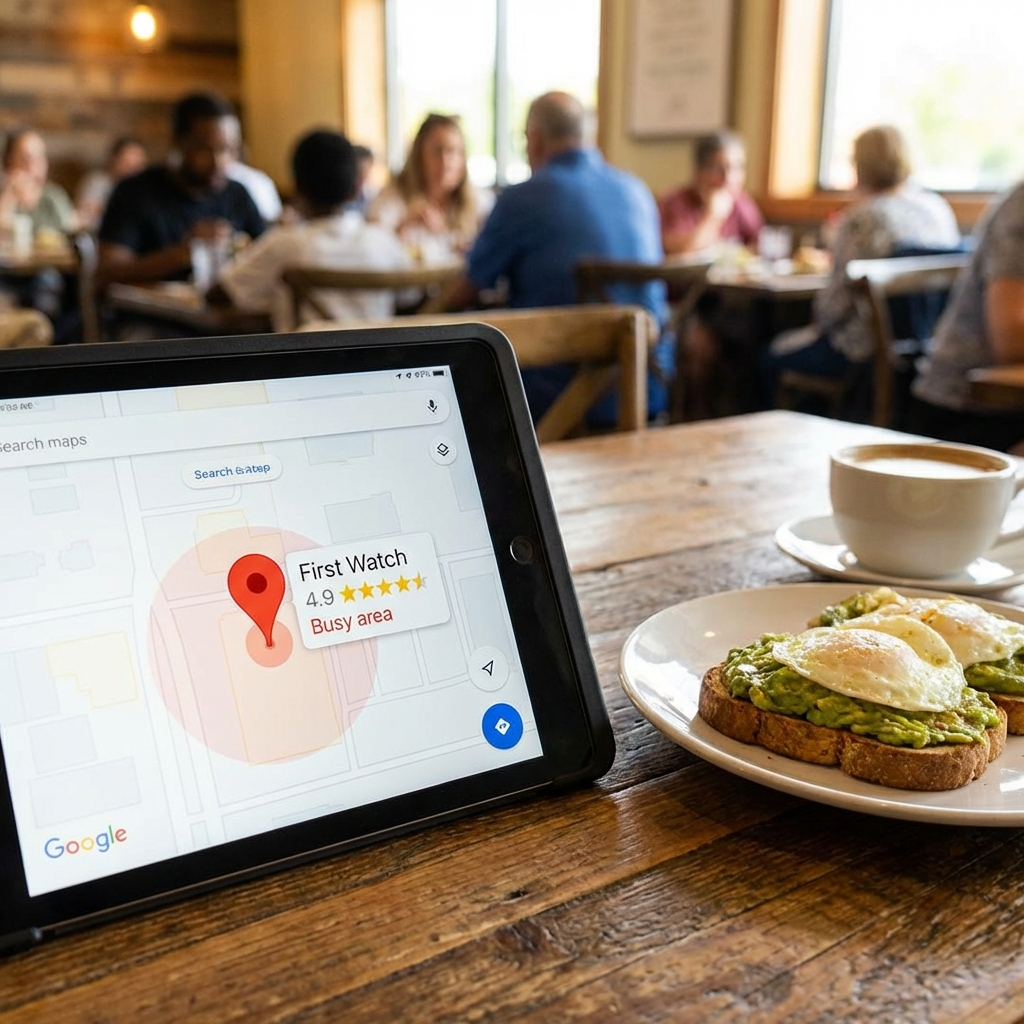
I’ve watched this pattern before. The winners in multi-location restaurant growth understand one principle: local SEO determines who owns the category in each market.

The Local Search Behavior That Drives Restaurant Revenue

Look at the numbers. 98% of customers search online for nearby companies. That’s up from 90% in 2019.

More telling: 76% of “near me” mobile searches lead to a store visit within 24 hours. For restaurants, local search visibility converts to foot traffic the same day.

First Watch’s digital marketing test regions proved this. When you dominate local search results, traffic increases by hundreds of basis points. When you don’t, you’re invisible to the 62% of consumers who use local search results when looking for restaurants.

The restaurant industry will surpass $1.1 trillion in traditional sales in 2026. That’s a 4.1% year-over-year increase. But the brands capturing that growth are the ones who show up first in local search.

Google Business Profile: The Modern Full-Page Ad

I tell clients that an optimized Google Business Profile is the equivalent of a full-page Yellow Pages ad in 1995.

It’s not a comparison. It’s the same strategic position.

Based on a 2025 Malou study of 300+ locations, restaurants optimizing their Google Business Profile get 2.3x more reviews than others and at least 15% more interactions after six months.

Restaurants that actively manage their profile get 70% more engagement on Google. That engagement translates to calls, direction requests, and online orders.

First Watch operates 633 locations. Each location competes in its own local market. Each market has its own search behavior, competition, and customer base. You can’t win 633 local markets with a single corporate website and hope.

You win by optimizing each Google Business Profile. You win by managing reviews at the location level. You win by ensuring every profile has accurate hours, complete service details, and regular updates.

The Multi-Location Challenge First Watch Solved

Managing one Google Business Profile takes discipline. Managing 633 takes a system.

Multi-location restaurant brands face a specific problem. Corporate wants brand consistency. Local managers need flexibility to respond to their market. Customers expect accurate, current information for their specific location.

Most brands fail at this. They either centralize everything and lose local relevance, or they decentralize and lose brand consistency.

First Watch’s digital marketing test regions worked because they solved this problem. They created a system that maintains brand standards while optimizing for local search in each market.

The result: several hundred basis points of traffic increase in test regions. That’s not incremental improvement. That’s category dominance.

Reviews Drive Decisions and Rankings

Here’s what most restaurant operators miss: reviews do double duty.

First, they influence customer decisions. 47% of diners are more likely to visit a restaurant if they see the business responds to reviews. And 88% of potential diners trust online reviews as much or more than word-of-mouth recommendations.

Second, they impact local search rankings. Google’s algorithm factors review quantity, recency, and response rate into local pack rankings.

Research from Harvard Business School shows that a one-star increase in a restaurant’s Yelp rating correlates with a 5-9% increase in revenue.

First Watch’s expansion to 633 locations means they need a review management system that works at scale. You can’t manually monitor and respond to reviews across hundreds of locations. You need automation with human oversight.

The Traffic to Revenue Conversion

Local SEO drives traffic. But traffic only matters if it converts.

First Watch’s same-store sales increased 3.1% while traffic decreased 1.9%. That tells me they’re converting higher-quality customers. Local SEO brings in customers who already decided to visit. They searched for breakfast restaurants near them. They saw First Watch in the local pack. They clicked for directions.

That’s a qualified lead. They’re not browsing. They’re ready to eat.

Compare that to traditional advertising. You pay to interrupt someone’s day and hope they remember your brand when they get hungry. Local SEO captures customers at the moment of intent.

The conversion rate reflects this. 28% of searches for something nearby lead to a purchase. Nearly one in three local retail searches convert to sales.

The 2026 Rollout and What It Means

First Watch plans a full system rollout of their digital marketing strategy in fiscal 2026. They tested it in select regions. It worked. Now they’re scaling it across all 633 locations.

This is how category leaders operate. They test. They measure. They scale what works.

The several hundred basis point traffic increase in test regions will compound across the entire system. That’s not just growth. That’s market share capture from competitors who are still guessing about their marketing.

Over 65% of restaurant searches start on Google Maps or mobile “near me” queries. First Watch is positioning every location to win those searches.

What This Means for Multi-Location Service Brands

First Watch’s strategy applies beyond restaurants. Any multi-location service business faces the same challenge: how do you dominate local search in every market you operate?

The answer is systematic local SEO. You need a centralized system that optimizes each location’s Google Business Profile. You need automated review management that maintains response rates. You need consistent posting across locations while allowing for local customization.

Most importantly, you need measurement. First Watch tested their digital marketing strategy in specific regions before rolling it out system-wide. They measured traffic increases. They tracked conversion rates. They proved ROI before scaling.

That’s strategic marketing. You don’t guess. You test, measure, and scale what works.

The Local SEO Advantage Compounds

Here’s what makes local SEO powerful for multi-location brands: the advantage compounds.

When you rank first in local search, you get more clicks. More clicks lead to more reviews. More reviews improve your rankings. Better rankings bring more clicks.

It’s a reinforcing loop. The brands that establish local search dominance early create a moat that competitors struggle to cross.

First Watch’s 64 new restaurant openings in 2025 benefit from this. Each new location can leverage the brand’s review management system, Google Business Profile optimization, and local SEO strategy from day one.

They’re not starting from zero. They’re starting with a proven system that delivers several hundred basis points of traffic increase.

The Bottom Line

First Watch’s Q4 2025 results show what happens when a multi-location brand gets local SEO right. Same-store sales increased 3.1%. Operating margin improved to 2.9%. Digital marketing test regions experienced several hundred basis points of traffic increase.

The 2026 system-wide rollout will amplify these results across all 633 locations.

This is the pattern I see with category leaders. They recognize that local SEO is the primary discovery mechanism for customers. They build systems to dominate local search in every market they operate. They measure results and scale what works.

The restaurant industry will generate $1.1 trillion in sales in 2026. The brands capturing that growth are the ones who show up first when customers search for restaurants near them.

Local SEO determines who owns the category. First Watch proved it in their test regions. Now they’re scaling it across their entire system.

That’s how you win in multi-location service businesses. You don’t compete on price or hope. You compete on visibility. You own local search in every market you operate. My BrandCommand Franchise Marketing System can do this for you. Book a demo and see for yourself: https://bookmenow.info/book/bill-jackman/brandcommand-demo
Why Mortgage Brokers Are Fighting Over Scraps

Test Gadget Preview Image

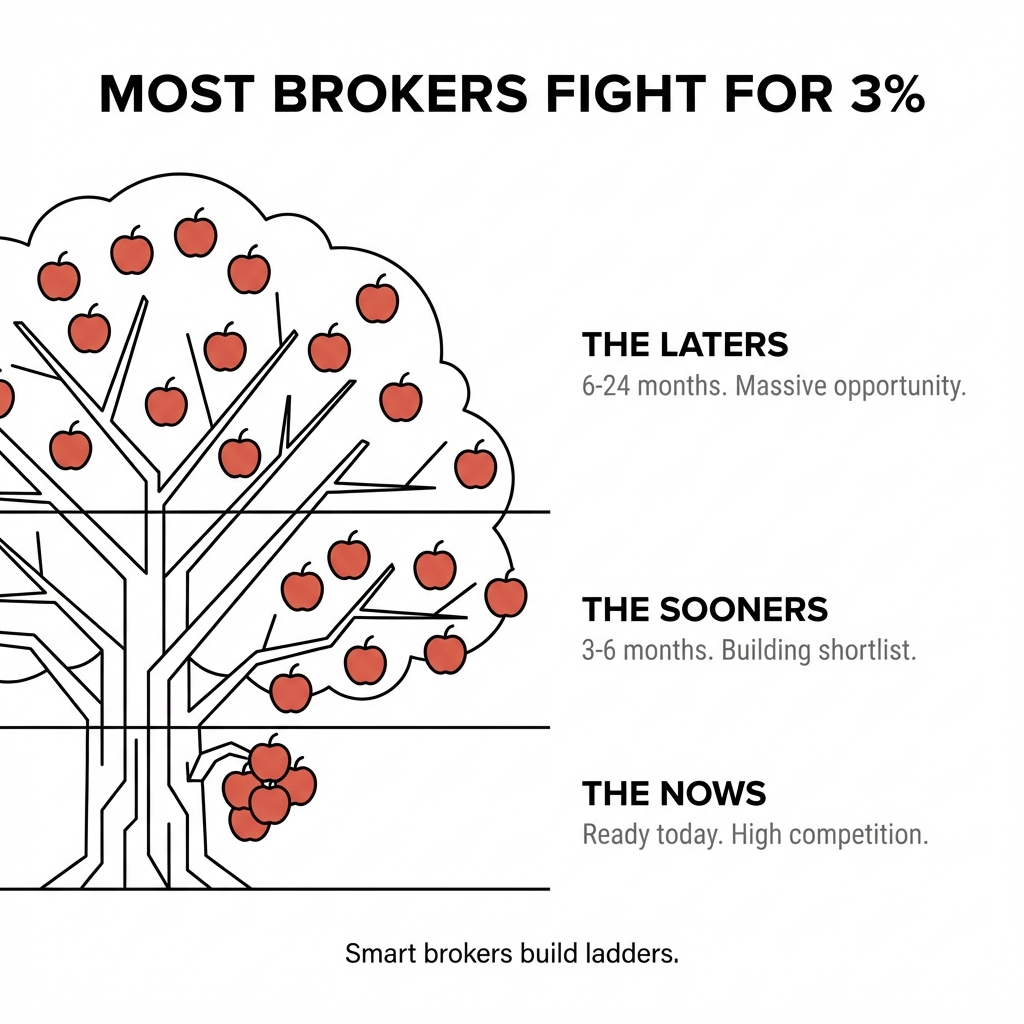
Most mortgage brokers are fighting over the same 3% of homebuyers who are ready to close next week.

Meanwhile, 93% of Gen Z still wants to own homes someday. But they’re not calling mom and dad for broker referrals anymore.

The referral networks that built careers over decades are fragmenting. Families are scattered. Gen Z homebuying patterns show they research independently, judge you by your Google reviews, and make decisions based on social proof rather than family recommendations.

This creates a fundamental problem. Every broker is chasing the same “now” buyers while ignoring the massive pipeline of future clients.

The Apple Tree Problem

Think of your market like an apple tree.

Most brokers are jumping for the low-hanging fruit. The ready-to-buy-today clients on the bottom branches. Everyone sees those apples. Everyone fights for them.

But the real harvest is in the middle and top of the tree. The prospects who won’t buy for 6, 12, or 18 months. The ones doing early research, comparing options, building trust over time.

Smart brokers build ladders. They create systems to reach the entire tree.

The Nows, Sooners, Laters Framework

I break every prospect pipeline into three categories:

The Nows: Ready to buy immediately. Every broker fights over these. High competition, low margins, stressful closes.

The Sooners: Actively researching, comparing options. Timeline is 3-6 months. They’re building their short list.

The Laters: Early awareness stage. They know they want to buy someday but haven’t committed to a timeline. Could be 6-24 months out.

Most brokers only see the Nows. They spend all their marketing budget competing for immediate buyers.

The winning strategy captures all three categories. When your Laters become Sooners, and your Sooners become Nows, you’re already their trusted guide.

Why AI Changes Everything

The search behavior shift is happening faster than most brokers realize.

Traditional search behavior shift data shows search engine volume will drop 25% by 2026. Gen Z prospects are asking AI assistants questions instead of scrolling through broker websites.

This creates opportunity for brokers who adapt early.

AI-driven systems can handle the qualification and nurturing that used to require manual follow-up. AI automation benefits include 30-50% reduction in time spent on routine inquiries.

Your AI webchat captures the 11 PM question: “Can I afford a house with student loans?”

Your AI voice receptionist books qualification calls while you sleep.

Your automated email sequences keep you top-of-mind during the 18-month research process.

The Chickening Out Period

Here’s what most vendors won’t tell you: the first 12-14 weeks are rough.

You’ll feel upside down. You’ll question the investment. You’ll wonder if the old way was better.

I call this the chickening out period. Every broker goes through it.

The difference between success and failure is pushing through those first three months. That’s when the system starts learning, your rankings improve, and the pipeline begins filling with qualified prospects.

You’re not just building a marketing system. You’re building a competitive moat.

The Hockey Stick Reality

AI adoption follows a hockey stick curve. Slow at first, then exponential.

In the next 3-5 years, every serious mortgage broker will be using AI-driven marketing systems. The question is whether you’ll be early or late to the party.

Early adopters capture market share while competitors are still manually qualifying leads and chasing referrals from retired networks.

Late adopters find themselves competing against brokers who have 18-month head starts on pipeline development and client education.

Building Your Ladder

The winning brokers are already building unified AI systems that capture anonymous website visitors and nurture them through the entire buying journey.

They’re optimizing Google Business Profiles to show up in AI search summaries.

They’re creating content that educates Gen Z prospects about avoiding their parents’ financial mistakes.

They’re setting up automated review management and reputation systems.

Most importantly, they’re thinking in quarters instead of weeks. They’re playing the long game while competitors fight over scraps.

The mortgage industry is splitting into two groups: brokers who harvest the whole tree, and brokers who keep jumping for the same low-hanging fruit.

Which group will you choose?

The Fourth Visit: Your Restaurant’s Hidden Loyalty Threshold

Most restaurants are fighting the wrong battle.

They’re chasing new customers while a 95 percent guarantee sits right there in their own data.

The economics are brutal right now. Seventy-five percent of Canadians are eating out less due to cost-of-living pressures. Forty percent of restaurants are either losing money or just breaking even.

Food costs are up. Labor costs are up. Insurance premiums have doubled in some markets.

Every operator I know is feeling the squeeze.

But here’s what most miss: the crisis isn’t about getting people through the door. It’s about what happens after they leave.


The Power of 4 reveals a loyalty pattern hiding in plain sight


First-time customers return at a 46 percent rate. Decent, but nothing to build a business on.

Second and third visits? About 40 percent come back. Still unpredictable.

Then something shifts at the fourth visit.

Return rates jump to 95 percent.

Ninety-five percent.

The fourth visit represents a psychological threshold where casual diners transform into committed regulars. Something fundamental shifts in their relationship with your restaurant.

They’ve established favorites. They recognize faces. They feel at home.

That comfort creates near-certain loyalty.


What this means for your operation


Most restaurants treat every customer the same. They spend equally trying to attract strangers and retain visitors.

That’s economically irrational.

Acquiring a new customer costs five to seven times more than retaining an existing one. Yet most marketing budgets are weighted heavily toward acquisition.

The Power of 4 gives you a specific target. Your goal isn’t repeat business. You need to get customers to visit number four, where loyalty becomes predictable.

Retention stops being vague hope. You get a pathway with measurable milestones.


So how do you engineer that fourth visit?


Start by mapping the journey from first to fourth visit. What’s the typical timeline? Two weeks? A month? Three months?

Then design interventions specifically for visits two and three.

A targeted offer after the first visit. “We noticed you tried our brunch. Here’s 15 percent off dinner this week.”

A personalized message after the second visit. “Glad you came back. Next time, ask for Maria. She’ll make sure you get our best table.”

A meaningful reward timed for the third visit. Something to make them excited about coming back.

Treat visits two and three as your most valuable marketing real estate. These aren’t random touchpoints. They’re the bridge to near-guaranteed loyalty.

Most loyalty programs fail because they’re designed for customers who are already loyal. They reward the tenth visit when the real battle is won at the fourth.


The fourth visit changes your entire revenue model


When you know getting someone to visit four times creates a 95 percent return rate, you forecast revenue with confidence. You can staff more accurately. You can plan inventory with less waste.

You stop hoping customers return. You know they will.

Certainty beats acquisition campaigns every time.

Right now, with 75 percent of Canadians cutting back on dining out, you can’t afford to treat customer relationships like a guessing game. You need strategic clarity about where loyalty actually forms.

The fourth visit is that moment.

Every customer who reaches it becomes a predictable revenue stream. Every customer who doesn’t represents wasted acquisition cost and lost lifetime value.


Strategy beats hope


Most restaurants are drowning in tactics. They’re posting on social media, running promotions, trying every platform and gimmick that promises results.

Tactics without strategy is expensive chaos.

The Power of 4 tells you where to focus your energy and resources for maximum return.

You go from scattered marketing to a system with clear milestones.

When economic pressure increases, clarity wins. You don’t have resources to waste on activities without measurable outcomes.

The restaurants that survive will understand this loyalty threshold. They’ll build their retention system around reaching visit four.

The fourth visit is where you win or lose.

Your competition might already know this. Or they’re about to find out.

The Edge | 🕒 3-Minute Read | Real strategies. No fluff. Sharpen your marketing.

Proven Strategy: The 15-Minute Rule That Converts More Leads

With one of our franchise clients, we installed a system that replies to every inquiry within 15 minutes—even after hours.

Within 30 days:
✔️ Lead-to-close rate jumped 47%
✔️ Review volume doubled
✔️ Weekend inquiries (previously ignored) turned into booked calls

Speed isn’t just polite—it’s profitable.
Use this rule: If you don’t respond in 15 minutes, assume you’ve lost the lead.

What to do:
→ Set up an AI web chat + SMS responder
→ Add a lead assignment system with clear internal rules
→ Track average response time weekly


Battle-Tested Tactic: Use This Subject Line to Rescue Your Stalled List

Subject: Still interested, or should I close your file? This “breakup” email gets 2x higher reply rates than typical follow-ups.

It works because it flips the power dynamic—and prompts a quick yes/no. Great for reviving cold prospects or old lead lists.


Prompt Swipe of the Week: Turn Website Visitors Into Buyers with This ChatGPT Prompt

Paste this into ChatGPT:

“You are a conversion copywriter. Rewrite the home page headline for a business that offers [insert what you do] to [insert who you serve]. It should be under 12 words, emotionally compelling, and make the reader want to scroll.”

Use it for testing hooks or improving underperforming landing pages fast.


Campaign Insight: Where Google Ads Actually Work Right Now

Across home services, health clinics, and real estate, we’re seeing this pattern:

>Highest ROI = Google Performance Max + call extension
>Lowest ROI = broad display ads with no conversion tracking

If you’re spending without a conversion goal (form fill, call, appointment), you’re burning cash.


Sharp Operator: Quote of the Week — Taylor Welch

“Traffic isn’t the issue.
Conversion is the issue.
You don’t need more eyeballs. You need more yeses.”

Bookmark that.


Real Talk: If your marketing feels chaotic… it probably is.

It’s not that your team isn’t working hard.
It’s that everyone’s reacting instead of executing a system.

Start here:
→ One lead pipeline
→ One message map
→ One source of truth for metrics

Simplify. Then scale.


What’s New on The Edge:

✔️ Signs Your Email Marketing Strategy Needs a Fresh Approach
✔️ How To Handle Negative Comments on Social Media
✔️ Summer Marketing Ideas for Newfoundland Tourism Businesses


Want a Local Marketing Audit for $399?

I’ll show you exactly where leads are leaking—and how to fix it fast.
👉 Start Here


Until next week—stay sharp, execute smarter.
– Bill